Perforated Gypsum Board in Bangalore – Acoustic Ceiling Solutions by EchoPro Acoustics
A Perforated Gypsum Board is a specialised ceiling and wall finishing material designed to combine an attractive interior appearance with improved room acoustics. It features a series of precisely arranged holes or perforations that allow sound waves to interact with an acoustic backing and the cavity behind the board. This makes it a suitable solution for offices, auditoriums, conference rooms, studios, educational institutions and other spaces where controlling reverberation is important.
EchoPro Acoustics supplies acoustic and soundproofing products in Bangalore and across South India. We help customers explore suitable materials for commercial interiors, residential entertainment rooms and professional acoustic environments. Whether you are planning an acoustic ceiling, a recording room or a conference space, our team can help you understand product options, technical requirements and the factors to consider before purchasing a Perforated Gypsum Board.
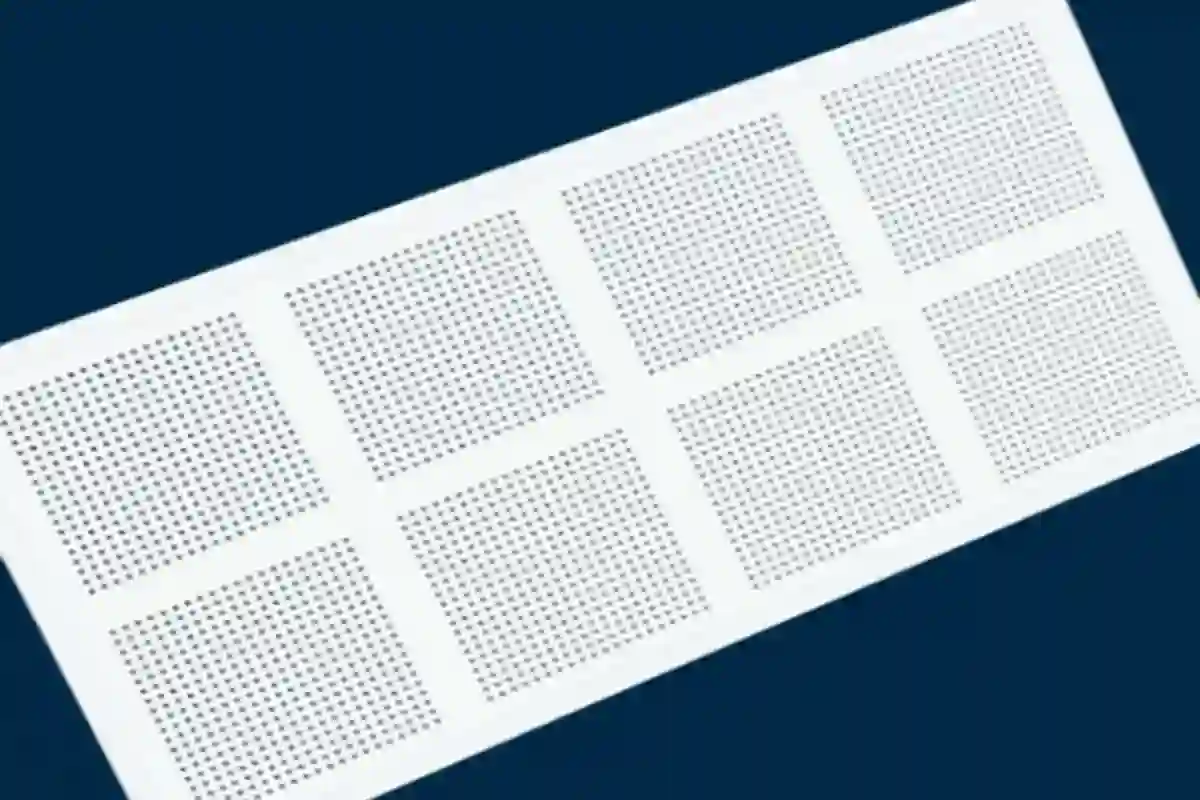

What is Perforated Gypsum Board?
A Perforated Gypsum Board is a gypsum-based panel manufactured with a planned arrangement of circular, square or other patterned openings. Unlike a conventional plain gypsum board, the perforated version is specifically designed to support sound absorption when installed as part of an appropriate ceiling or wall system. Many acoustic products include a special tissue or fleece on the rear surface to support the acoustic design and prevent the backing material from becoming visible through the holes. The arrangement of perforations, hole diameter, spacing, open-area percentage, board thickness and rear cavity all influence the final performance.
The board is generally installed on a suitable metal framework, suspended ceiling system or other manufacturer-approved support structure. An air cavity and, where specified, a layer of sound-absorbing insulation may be incorporated behind the panel. This combination can help reduce sound reflections within an enclosed room. Perforated gypsum products are available in different formats, finishes and patterns, including continuous-board systems and modular ceiling tiles. Customers comparing an acoustic panels range should assess the intended application, visual requirements, maintenance needs and acoustic targets before selecting a material. A perforated board is principally a sound-absorbing finish; it should not automatically be treated as a complete soundproofing barrier.
Why Choose Perforated Gypsum Boards
Perforated Gypsum Board is a practical choice for projects that require a neat ceiling finish alongside improved acoustic comfort. Its benefits depend on the selected product, installation method and overall room design. The following eight factors explain why architects, interior designers, contractors and building owners consider this solution.
Helps Control Echo and Reverberation
Sound reflects from hard surfaces such as concrete walls, glass, tiled floors and plain ceilings. Excessive reflections can make speech unclear and conversations tiring. A properly designed perforated gypsum ceiling allows sound energy to reach the absorbing material and cavity behind it, helping reduce reverberation. This is particularly useful in meeting rooms, classrooms, auditoriums and other spaces where speech intelligibility matters.
Creates a Clean and Professional Interior Finish
Gypsum ceiling systems are widely used in contemporary interior design because they can produce a uniform architectural appearance. Perforated patterns add visual detail without requiring large decorative features or exposed acoustic materials. Depending on the product and installation system, designers can choose between a continuous ceiling effect and a modular layout. Careful joint treatment and alignment help create a refined final surface.
Offers Different Perforation Patterns
Perforation designs may include circular holes, square openings, regular grids and other manufacturer-defined patterns. These designs influence both appearance and acoustic behaviour. A pattern should not be selected solely because it looks attractive; the acoustic data, open-area percentage, backing arrangement and recommended support system must also be considered. Choosing the right combination helps balance visual design with functional requirements.
Supports Large Commercial Interiors
Offices, training centres, auditoriums and hospitality spaces often require ceiling systems that cover substantial areas consistently. A suitable Perforated Gypsum Board system can provide an integrated architectural finish across such spaces. The project team can plan lighting, air-conditioning diffusers, speakers and access panels alongside the ceiling layout. Their positions should be finalised before installation to avoid unnecessary cutting and disruption.
Works with Suitable Acoustic Backing Materials
The perforated face can work together with a rear acoustic tissue, an air cavity and a specified sound-absorbing insulation layer. The combination should be selected according to the required acoustic performance and the system manufacturer’s recommendations. Materials such as glass wool, rockwool or other suitable absorbers may form part of a tested assembly. The insulation should remain properly supported and should not obstruct the perforations.
Supports Speech Clarity in Shared Spaces
When reverberation is excessive, sound from one speaker can continue arriving at listeners after the next words have been spoken. This reduces clarity and makes people work harder to understand conversations. An appropriately designed ceiling can help reduce reflected sound and improve the overall listening environment. It is especially useful where several people need to communicate clearly without raising their voices.
Can Be Coordinated with Other Acoustic Materials
Not every surface in a room needs to use the same material. A ceiling may use perforated gypsum while selected walls incorporate other products according to the room’s sound absorption and design requirements. For example, PET Polyester Acoustic Panels and PU Foam Acoustic Panels can be considered for wall-mounted acoustic treatment where suitable. The choice depends on the frequency range, finish, mounting method, fire requirements and the available installation area.
Suitable for Planned, Integrated Ceiling Designs
A perforated ceiling can accommodate a coordinated layout of lighting, service openings and other architectural elements when the system is designed in advance. This helps architects and interior designers maintain a consistent visual language throughout the space. However, heavy fixtures must have independent or specifically approved support, and the ceiling cannot be assumed to carry loads beyond its declared capacity.
Contact Us
Perforated Gypsum Boards are widely used in
Perforated Gypsum Board is widely used in commercial, institutional and entertainment interiors where reflected sound needs to be controlled without compromising the appearance of the ceiling. Common examples include conference halls, auditoriums, offices, classrooms, hotels, libraries, restaurants and media production facilities. It is particularly relevant in rooms where multiple people speak, listen to presentations or participate in discussions.
The material can be selected for new construction, office fit-outs and certain renovation projects, provided the existing structure and ceiling arrangement are suitable. For projects seeking a different visual or acoustic finish, alternatives such as Wood Wool Board may also be evaluated. The correct material should be selected only after considering the room’s dimensions, background noise, reverberation requirements, fire strategy, available ceiling depth and total project budget.
- False Ceiling Insulation
- Drywall Partition Infill
- Soundproofing Assemblies
- Auditoriums and Theatres
- Home Theatres and Media Rooms
- Recording and Music Studios
- Conference and Meeting Rooms
- Schools and Educational Institutions
- Hotels and Hospitality Projects
- Commercial Offices
- Hospitals and Healthcare Facilities
- Plant Rooms and Service Enclosures
- Residential and Multi-Unit Buildings
Typical Applications of Perforated Gypsum Boards
Perforated Gypsum Board can contribute to better acoustic comfort in many settings, although each application has different requirements. The appropriate board pattern, acoustic backing, suspended depth and amount of coverage should be decided according to how the room will be used.
Podcast Studios
Podcast rooms require clear recorded speech with controlled room reflections. A suitable perforated gypsum ceiling can help reduce unwanted reflections from above, particularly when combined with carefully positioned wall treatment. Small studios may also need microphones, isolation arrangements and controlled background noise. A ceiling alone will not eliminate external traffic noise or prevent sound from travelling into neighbouring rooms.
Home Theater and Entertainment Rooms
Home theaters benefit from a controlled acoustic environment in which dialogue remains clear and reflected sound does not overwhelm the listening experience. Perforated gypsum may be considered for the ceiling as part of a broader acoustic design. Speakers, subwoofers, seating positions and room dimensions must be considered together. Low-frequency bass management normally requires additional design measures beyond a perforated ceiling.
Recording and Music Studios
Recording studios require careful control of reflections, tonal balance and room response. A perforated ceiling can contribute to absorption within an appropriate system, but professional recording rooms may require different treatments for control rooms, vocal booths and live rooms. The installation should follow an acoustic plan rather than simply covering every available surface with the same material.
Corporate Offices and Workspaces
Open offices can suffer from speech distractions caused by conversations reflecting from hard ceilings. A suitable acoustic ceiling helps manage these reflections and can improve comfort for employees working in shared areas. Its performance should be considered alongside workstation arrangement, partitions, flooring and other sound-absorbing surfaces. Background noise from mechanical equipment must also be assessed separately.
Conference and Meeting Rooms
Conference rooms depend on clear communication between people seated around a table and participants joining through video calls. Excessive reverberation can make distant voices and online conversations harder to understand. A well-designed Perforated Gypsum Board ceiling can reduce part of the reflected sound, supporting a more comfortable meeting environment when paired with appropriate microphones and room acoustics.
Classrooms and Educational Institutions
Students must understand spoken instructions without constantly straining to hear the teacher. In classrooms, lecture halls and training rooms, controlling reverberation can support speech intelligibility and a more focused learning environment. The system should be selected according to room size, occupancy, ceiling height, cleaning requirements and the performance criteria specified for the educational facility.
Hotels and Hospitality Spaces
Hotels use acoustic ceiling systems in reception areas, function rooms, banquet spaces, corridors and selected guest facilities. Perforated gypsum can provide a consistent interior finish while helping control reflected sound where appropriate. In busy public spaces, the design should also account for fire safety, maintenance access, humidity exposure and coordination with lighting and air-conditioning systems.
Restaurants and Cafés
Hard flooring, glass surfaces and crowded seating can make restaurants noisy, especially during peak hours. An appropriately designed perforated ceiling can absorb some reflected sound and help create a more comfortable environment for conversations. It should be combined with suitable interior finishes and a practical cleaning strategy, particularly in areas exposed to cooking vapours, grease or high humidity.
Libraries and Reading Rooms
Libraries require a calm environment in which conversations, footsteps and other incidental noises do not become excessively distracting. Perforated gypsum can help control reflections from the ceiling, supporting a quieter-feeling interior. The acoustic design should also consider bookshelves, furniture, floor finishes and the separation of group-study areas from silent reading zones.
Gyms and Fitness Centres
Gyms often contain hard, reflective surfaces and loud equipment, music or instructor announcements. A suitable acoustic ceiling can contribute to reducing reflected sound in compatible areas. Before specifying the system, the installer should assess humidity, impact risk, mechanical vibration, cleaning procedures and the possibility of condensation. Some high-impact or damp locations may require a different ceiling solution.
Co-working facilities include individual desks, meeting rooms, phone booths and common collaboration zones. An effective acoustic design must address the different sound requirements of each area. A perforated ceiling can help reduce reverberation in larger common spaces, while smaller meeting rooms may require supplementary wall treatment and improved sound isolation.
Commercial and Service Areas
Retail stores, showrooms, customer service centres and other commercial spaces may use perforated gypsum to combine a finished architectural ceiling with acoustic control. The pattern can be coordinated with the lighting and interior design. Product selection should account for maintenance access, customer traffic, fire requirements and any specific design or performance standards included in the project specification.
Technical Specifications of Perforated Gypsum Boards
Material
Gypsum Board
Thickness
12.5mm
Size
8ft x 4ft and 6ft x 4ft
Colour
White. Has to be Painted.
Weight
9 – 10 Kg / m2
Thermal Conductivity
0.16 W / mK
N.R.C
0.75 – 0.90 with Insulation Backing
Perforation Area
18%
Perforation Size
9.7 x 9.7 mm Square
Hole Spacing
9.7mm
Plain border size
30mm
Tapered Edge
All 4 Sides
Acoustic Performance of Perforated Gypsum Boards
The acoustic performance of a Perforated Gypsum Board depends on the interaction between the perforated face, the air cavity, the backing layer and the acoustic properties of the room. Incident sound waves reach the surface and some of their energy passes through the openings, allowing interaction with the cavity and absorbing material behind the board. Energy is dissipated through mechanisms that include viscous losses as air moves through small openings and porous-material losses within a suitable backing. The board therefore operates as part of a system rather than as an isolated sheet. Changing the perforation diameter, pitch, open-area ratio, cavity depth or backing composition can alter the frequency-dependent absorption characteristics.
One important performance parameter is the Noise Reduction Coefficient (NRC), a single-number rating based on sound absorption measurements across selected mid-frequency bands. It can help compare products, but it does not fully describe how a ceiling behaves at every frequency. The sound absorption coefficient, commonly written as α, indicates the proportion of incident sound energy absorbed under specified test conditions at a particular frequency. Larger NRC values generally indicate greater average absorption over the relevant test bands, but the result is valid only for the tested configuration. A Perforated Gypsum Board with a suitable acoustic backing may perform differently from the same board installed with no insulation or a different cavity depth. For technical projects, request test results and the test method used rather than relying on a single marketing number.
The backing cavity influences the system’s acoustic impedance and frequency response. A perforated face combined with an air cavity can behave in a manner broadly related to a resonant absorber, while a porous layer can provide additional broadband dissipation. The details are more complex than a simple rule that a deeper cavity always performs better: the result depends on perforation geometry, flow resistance, cavity depth, insulation properties and the sound field. Absorber thickness and density must therefore be selected according to the tested assembly or an appropriate acoustic design. Suitable Polywool Insulation or Rockwool Insulation may be considered for the backing where the selected ceiling system permits it. Different products are not interchangeable unless their performance and installation requirements are compatible.
A further distinction is the difference between sound absorption and sound transmission loss. Absorption helps reduce reflections and reverberation within a room, while transmission loss concerns how effectively a construction reduces sound passing from one space to another. A perforated face with open holes is not, by itself, a reliable soundproofing barrier. If a project requires better separation between a podcast studio and an adjacent office, the wall or ceiling assembly, airtightness, structural connections, doors and service penetrations must be addressed. Understanding what acoustic treatment involves is useful when defining the room’s goals. For additional guidance on planning room acoustics, customers can also consult this acoustic treatment overview. The correct system should be chosen using measurable targets such as reverberation time, speech intelligibility, sound absorption and, where necessary, tested sound insulation.
Important Notes When Buying Perforated Gypsum Boards
Before purchasing a Perforated Gypsum Board, customers should evaluate more than the material’s appearance and quoted price. The following ten considerations can help avoid specification errors, unnecessary costs and poor acoustic results.
1. Identify the Main Acoustic Objective: Decide whether the project needs lower reverberation, better speech clarity, sound isolation or a combination of these outcomes. A sound-absorbing ceiling can improve the acoustic comfort of a room, but it cannot independently guarantee that sound will not travel into an adjoining space. Define the objective before choosing the material.
2. Request the Exact Technical Datasheet: Products that look similar may have different thicknesses, hole patterns, weights, acoustic backing and performance ratings. Ask for the datasheet of the precise product being quoted. Confirm the dimensions, tolerances, permitted use, installation system and any applicable test reports before approving the specification.
3. Check the NRC Test Configuration: An NRC value should always be read alongside the conditions under which it was measured. Verify whether the result includes acoustic insulation, the specified plenum depth and a particular mounting arrangement. A rating obtained with insulation and an air cavity should not be presented as the guaranteed performance of the bare board.
4. Select the Correct Supporting Structure: The framework must match the board type, dimensions, weight and installation method. The contractor should verify suspension spacing, perimeter support, fixing points and service access before installation. If the wider project involves partitions or other specialist boards, a product such as Magnesium Oxide Board may be evaluated for an appropriate separate application, but it should not automatically be substituted into a system without technical approval.
5. Confirm the Fire Requirements: Check the project’s applicable fire-safety requirements and request valid documentation for the selected product and complete ceiling assembly. A classification declared for one board or system does not necessarily apply to another. Where the specification demands a tested fire-resistant construction, follow the approved assembly details, including the framework, joints, insulation and penetrations.
6. Consider Moisture and Environmental Conditions: Gypsum products are generally intended for specified interior conditions, and prolonged dampness can affect their performance. Check the manufacturer’s permitted relative humidity, temperature and exposure conditions. Kitchens, damp rooms and areas with condensation may require additional precautions or a different material. Ensure the building envelope and air-conditioning design do not expose the ceiling to persistent moisture.
7. Do Not Confuse Absorption with Soundproofing: If the priority is to prevent traffic noise, machinery noise or voices from travelling between rooms, the walls, doors, floor, ceiling void and service openings may need to be upgraded. A specialised Mass Loaded Vinyl Sheet may be considered as part of a suitably designed sound-isolation assembly. Its effectiveness depends on the complete construction, so a material choice alone cannot guarantee a specific decibel reduction.
8. Plan Lighting and Mechanical Services: Confirm the positions of lights, sprinklers, air-conditioning diffusers, speakers, detectors and access panels before the boards are fixed. Poorly planned cuts can affect the appearance, support and acoustic continuity of a ceiling. Heavy services should have appropriate independent or approved support, and all penetrations must follow relevant fire and building requirements.
9. Compare the Complete Installed Cost: The Perforated Gypsum Board price is only one part of the final project cost. Include the framework, suspension components, insulation, backing tissue where required, joint treatment, finishing, access provisions, wastage, transportation and labour. Obtain a detailed quotation so different suppliers’ offers can be compared on an equivalent product and installation scope.
10. Use Qualified Installers and Follow Product Instructions: Incorrect fixing, damaged perforations, unsuitable joints or poorly installed backing can affect the finished appearance and acoustic results. Confirm that the contractor understands the selected system and uses compatible accessories. Installation should follow the manufacturer’s instructions, including storage, cutting, fixing, jointing, finishing and inspection requirements.
Installation Guide for Perforated Gypsum Boards
Correct Perforated Gypsum Board Installation is essential for achieving a neat appearance and the intended acoustic performance. The ceiling should be planned around the selected manufacturer’s fixing details, board dimensions, perforation layout and required acoustic backing. The installation team should review the design before bringing the materials into the work area.
The following five steps describe a general installation sequence. Actual fixing methods differ between modular tiles and continuous perforated boards, so the product-specific installation manual should always take priority.
Step 1: Inspect and Prepare the Site
Measure the room, check the supporting structure and mark the ceiling levels. Finalise the locations of lights, air-conditioning outlets, sprinklers and inspection panels before starting work. Boards should be stored flat in a dry, clean location and protected from impact and moisture. Verify that the building services and framework can be installed without conflicting with the proposed ceiling.
Step 2: Install the Framework and Acoustic Backing
Install the approved metal framework and suspension components at the manufacturer’s specified spacing. Check the alignment, level and stability before fixing the boards. If the system requires a backing fleece or insulation layer, install it according to the system details without blocking the perforations or leaving unsupported sections. Glass Wool Insulation may be considered where it is compatible with the selected ceiling system and its fire, health and installation requirements.
Step 3: Position and Fix the Boards
Carefully position the boards according to the specified orientation and perforation pattern. Secure them using the approved fasteners, spacing and fixing sequence. Handle cut edges carefully and avoid damaging the visible face or rear tissue. Continuous perforated systems may require the holes to align across adjoining boards, while modular ceiling tiles must sit properly within their designated grid.
Step 4: Treat Joints and Complete the Finish
For continuous systems, treat joints, edges and fastener locations using the manufacturer’s approved materials and methods. Some products use specialist joint-filling techniques to create a near-continuous pattern; standard jointing procedures should not be substituted unless approved. Apply primer or paint only where permitted. Excessive paint or unsuitable coatings may obstruct the perforations and affect acoustic performance.
Step 5: Inspect the Completed Ceiling
Check the ceiling for level, consistent pattern alignment, secure fixing, damaged surfaces and clear perforations. Confirm that access panels and service outlets are correctly positioned. Verify that the backing remains in place and that the work complies with the specified system. A final inspection should also confirm that the installation documents, product details and any required compliance certificates are available to the project owner.
Frequently Asked Questions
1. What is a Perforated Gypsum Board used for?
Answer: It is primarily used in ceiling and selected wall systems where sound absorption and an attractive finish are required. Common applications include offices, auditoriums, meeting rooms, classrooms, hospitality spaces and studios.
2. Do Perforated Gypsum Boards provide soundproofing?
Answer: Not by itself. Its main purpose is generally sound absorption, which helps control reflections and reverberation inside a room. Soundproofing requires suitable construction to limit sound transmission between spaces.
3. What is the NRC of Perforated Gypsum Boards?
Answer: The Noise Reduction Coefficient depends on the specific board and the complete installation. Perforation pattern, backing material and air-cavity depth can affect the result. Always request the test report or technical datasheet for the proposed system.
4. What thickness is available?
Answer: Some common acoustic perforated gypsum products are available in 12.5 mm thickness, while other products and tile ranges can differ. EchoPro Acoustics can help customers check the availability and specifications of the option suitable for their project.
5. What is the Perforated Gypsum Board price in Bangalore?
Answer: The price depends on the product brand, dimensions, thickness, perforation pattern, quantity and supply requirements. Installation cost also depends on framework, insulation, finishing and site conditions. Request a project-specific quotation for an accurate estimate.
6. Are Perforated Gypsum Boards suitable for auditoriums?
Answer: Yes, it can be suitable for auditoriums when the selected system meets the project’s acoustic, fire-safety and structural requirements. The board should be specified as part of an acoustic design that considers room volume, seating, speech or music use, and reverberation targets.
7. Can it be installed on existing ceilings?
Answer: Possibly. The existing structure, available ceiling depth, weight allowance, service locations and condition of the substrate must be checked first. A site inspection or technical assessment can establish whether the existing ceiling can support a new system.
8. Can the perforated surface be painted?
Answer: Only follow the product manufacturer’s finishing instructions. Some boards are supplied unpainted or primed and can be finished using approved methods. Excessive paint or an unsuitable coating can block openings and alter acoustic performance.
9. Who supplies Perforated Gypsum Boards in Bangalore and South India?
Answer: EchoPro Acoustics supplies acoustic and soundproofing products in Bangalore and across South India. Contact the team to discuss the board type, quantity, application, delivery location and available technical documentation.
10. How do I choose the right board for my project?
Answer: Start by identifying the room’s purpose and whether your main goal is sound absorption, sound isolation or both. Then compare the technical datasheets, acoustic test results, fire requirements, ceiling depth, finish and total installed cost. Discussing these details with a supplier before ordering helps reduce the risk of selecting an unsuitable system.
Buy Perforated Gypsum Board in Bangalore – Contact EchoPro Acoustics
Looking for Perforated Gypsum Board suppliers in Bangalore for an office, auditorium, conference room, studio or commercial interior? EchoPro Acoustics supplies acoustic and soundproofing products in Bangalore and across South India. Contact our team to discuss your project requirements, product specifications, quantities, availability and Perforated Gypsum Board price. We can also help you explore suitable acoustic solutions for different room types and installation conditions.
Whether you are an architect, interior designer, contractor, consultant or building owner, choosing the right system begins with understanding your space and its acoustic requirements. Get in touch with EchoPro Acoustics for product enquiries and assistance with your acoustic and soundproofing projects.
Contact Us
#6, 10th B Cross, Jayswal Center, KHB Main Road, Kaveri Nagar, Kanakanagar, RT Nagar Post, Bangalore – 560032.
Email Address:
sales@jayswalgroup.com
anil@jayswalgroup.com
jayswal1@yahoo.co.in